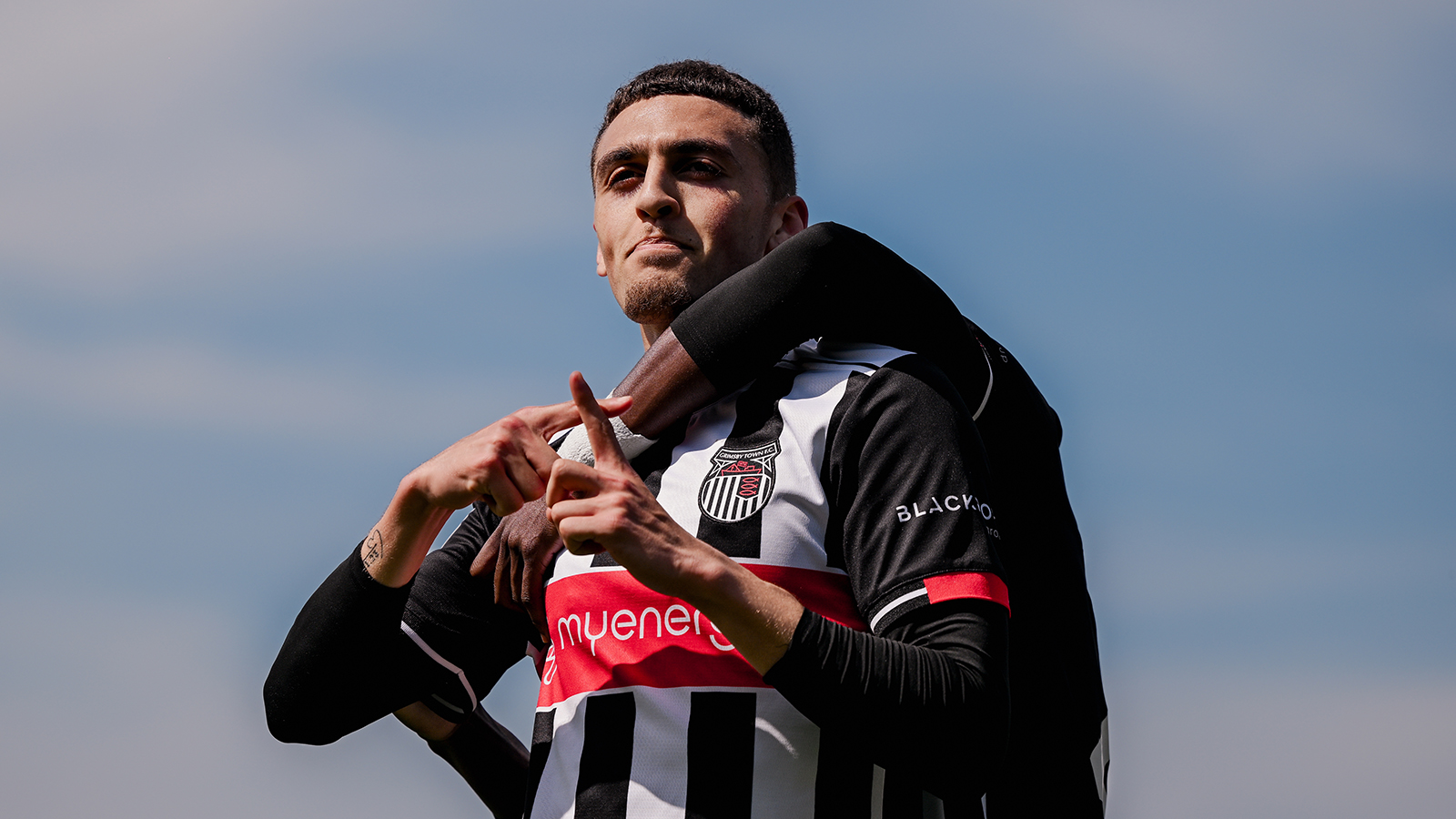
The Transfer Market’s Cruel Math: Why Jaze Kabia’s Exit Feels Like a Microcosm of Modern Football
Let’s get one thing straight: Jaze Kabia’s departure from Grimsby Town isn’t just a transaction. It’s a case study in the fragile economics of lower-league football, the fleeting nature of loyalty in a sport ruled by cold calculus, and the existential question every small club faces—how do you build something lasting when your best assets are guaranteed to leave?
When Progress Feels Like a Betrayal
Here’s the headline no one at Blundell Park wanted to read: their talismanic striker, the man who lit up League Two with 24 goals in 57 games, is off to Leyton Orient. On paper, it’s a win-win. Kabia gets a shot at a bigger stage; Grimsby pockets a fee that’ll keep the lights on for another month. But here’s the bitter truth—small clubs aren’t just selling players, they’re selling hope. And that hope rarely trickles back.
Personally, I think Kabia’s story exposes a paradox. His blistering pace and clinical finishing made him indispensable to Grimsby’s playoff push, yet those same qualities guaranteed his exit. Lower-league football has become a farm system for the elite, where clubs like Grimsby invest emotional capital while wealthier sides reap the rewards. What many people don’t realize is that this cycle isn’t just about money—it’s about psychological attrition. Fans invest in players who become temporary heroes, knowing full well they’ll eventually be discarded.
The ‘Unpaid Labor’ of Emotional Investment
Let’s dissect Kabia’s debut season. Scoring on your league debut? 24 goals as a rookie? That’s not just talent—it’s hunger. But here’s what the stats won’t tell you: every one of those goals carried invisible labor. He became the emotional engine of a team clawing its way out of mediocrity. His runs down the wing weren’t just athletic feats; they were lifelines for fans starved of success. And now? That labor has been monetized by a club with deeper pockets and thinner skin.
From my perspective, this transfer raises a deeper question: do players like Kabia even get to choose their trajectory? Or are they pawns in a game where agents and balance sheets decide their fate? His move to Leyton Orient feels less like a career choice and more like an inevitability—a function of football’s gravitational pull toward wealth.
The Grimsby Gambit: How Do You Replace a Phenomenon?
Grimsby’s statement thanked Kabia for his ‘commitment’ and ‘professionalism.’ Classic PR speak. But behind the platitudes lies a club facing a brutal reality: replacing a 24-goal forward on a shoestring budget. This is where the real drama unfolds. Lower-league managers aren’t just coaches; they’re alchemists, turning unproven talent into results. Without Kabia, Grimsby’s attack loses its spark, its unpredictability, its ‘wow’ factor.
What this really suggests is that small clubs operate in a state of perpetual triage. They nurture stars, lose them, then scramble to rebuild. It’s like trying to fill a bathtub with a sieve. And yet, this is the romance of lower-league football—its capacity for reinvention. Maybe Kabia’s departure will force younger players to rise, or unearth a hidden gem from the academy. Or maybe it’ll end in relegation anxiety. That’s the gamble.
The Bigger Picture: Football as Late-Capitalist Theater
Zoom out, and Kabia’s move mirrors broader trends. In an era where even mid-table Premier League sides outspend Grimsby 100:1, this transfer isn’t just about football. It’s late-stage capitalism in action—a system where value is extracted, consolidated, and repackaged for maximum profit. Kabia’s goals were a commodity, and Leyton Orient simply paid the price to privatize them.
A detail that I find especially interesting is how both clubs frame this. Grimsby celebrates his contribution; Leyton Orient tout ‘ambition.’ But where does the player fit in? Kabia’s likely thinking: ‘This is my window. I have to take it.’ And who can blame him? The margins between a career peak and irrelevance are razor-thin. Yet for fans who sang his name, this feels less like progress and more like abandonment.
Final Whistle: The Emotional Cost of Football’s Hierarchy
Here’s the takeaway no one’s voicing aloud: every transfer like this erodes the soul of smaller clubs. Kabia wasn’t just a player—he was a symbol of what’s possible when talent and circumstance collide. But football doesn’t do sentiment. As I see it, this move isn’t about Leyton Orient strengthening their squad; it’s about the slow bleeding of identity from the lower tiers. Can Grimsby recover? Of course. Will they find another Kabia? Maybe. But until the economics of the game change, this cycle will repeat itself—and fans will keep buying tickets, hoping for lightning to strike twice.